

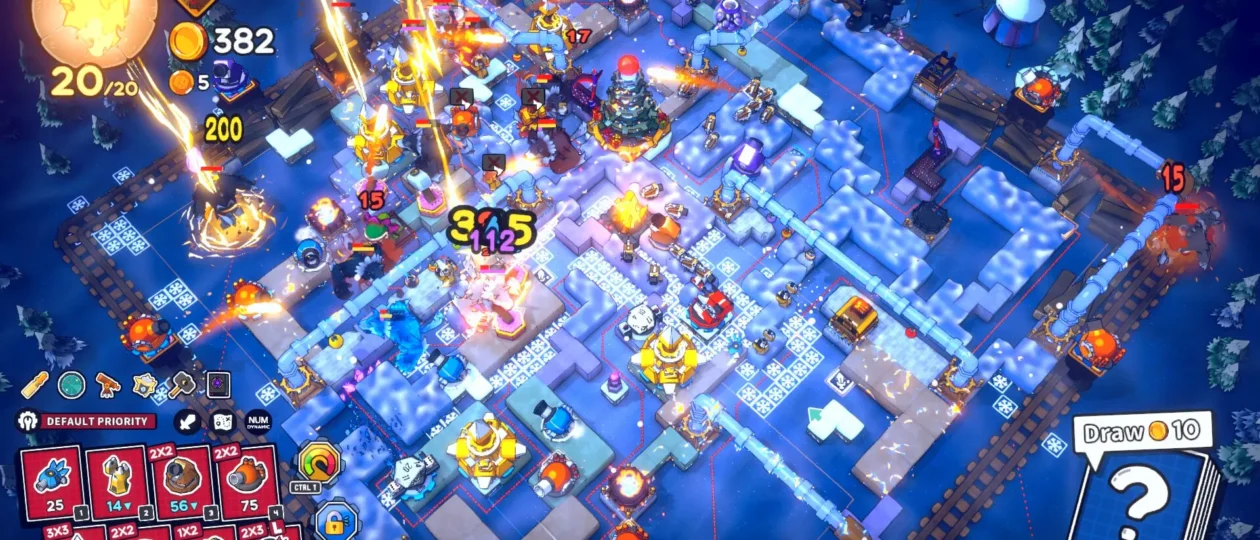
Good morning all, and it seems we’re in May already. Damn, this year is going by fast! There isn’t much happening here behind the scenes. I went to the Lake District a couple of weeks ago for a desperately needed vacation, and I am still getting back into the swing of things. I have a new mini review for you all while I slowly drag myself back into a reviewing mood. Today, I’m featuring Emberward!
Emberward is a roguelite tower defense game that distinguishes itself in a crowded genre by combining maze-building with traditional defensive strategy. Rather than merely placing towers along fixed paths, you actively create the enemy route using blocks, then build defenses on top of those. I quite like tower defense games in general, and Emberward is one of the more creative ones on the market.
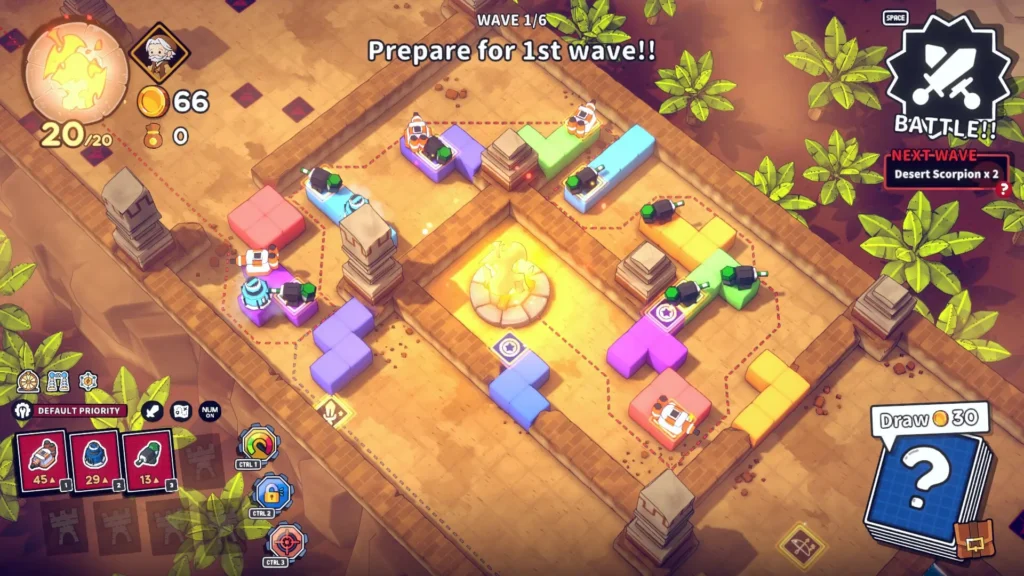
One of the game’s greatest strengths is the freshness of this core concept. The maze-building mechanic transforms each level into a spatial puzzle where efficiency and creativity are as crucial as raw firepower. Extending enemy paths, creating choke points, and adapting to randomized pieces provide a constant sense of problem-solving instead of monotony. This is further enhanced by roguelite elements, including randomized towers, upgrades, and relics, which give a lot of variance.
The game also benefits from strong overall design polish. I really appreciate games that do this. A clean interface, responsive controls, and clear visuals all make a mechanically complex concept easy to understand. Additionally, the replay loop is genuinely engaging at first: multiple characters, upgrades, and modes promote repeated runs, while the short-session structure facilitates easy pick-up-and-play. This blend of accessibility and depth is probably why it has such a large positive player review base, and it is why I’ve been drawn to it.
However, its weaknesses become more apparent over extended playtime. There are relatively few maps and scenarios, leading to a sense of similarity in runs once players master the systems. Although the procedural elements introduce some variation, they do not fully compensate for the limited number of environments and objectives.
Balance is another recurring issue. Certain towers or builds can feel significantly stronger than others, reducing strategic diversity once players identify optimal setups. Community feedback also indicates that some systems, such as relic choices or tower differences, may feel shallow or insufficiently impactful to meaningfully change gameplay.
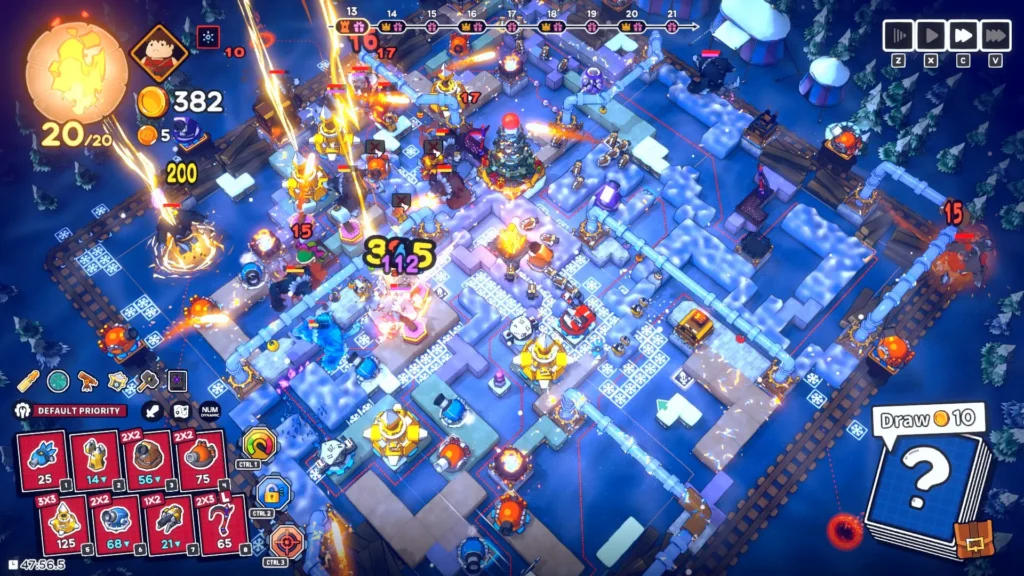
There’s also a broader design tension within its roguelite structure. While the game includes meta-progression and unlocks, these systems can feel either too rapid or not particularly meaningful, weakening the long-term sense of growth. For some players, this makes extended play less rewarding compared to other roguelites with deeper build crafting.
Overall, Emberward excels in its core loop: it is inventive, satisfying, and immediately engaging, offering a clever twist on tower defense that feels both strategic and tactile. However, it does not entirely escape the limitations of its scope, and over time, issues with content variety, balance, and long-term progression become more noticeable.
If you appreciate fresh mechanics and tight gameplay, it stands out. I still recommend Emberward, however, as I think it does a good enough job for the price point.
